
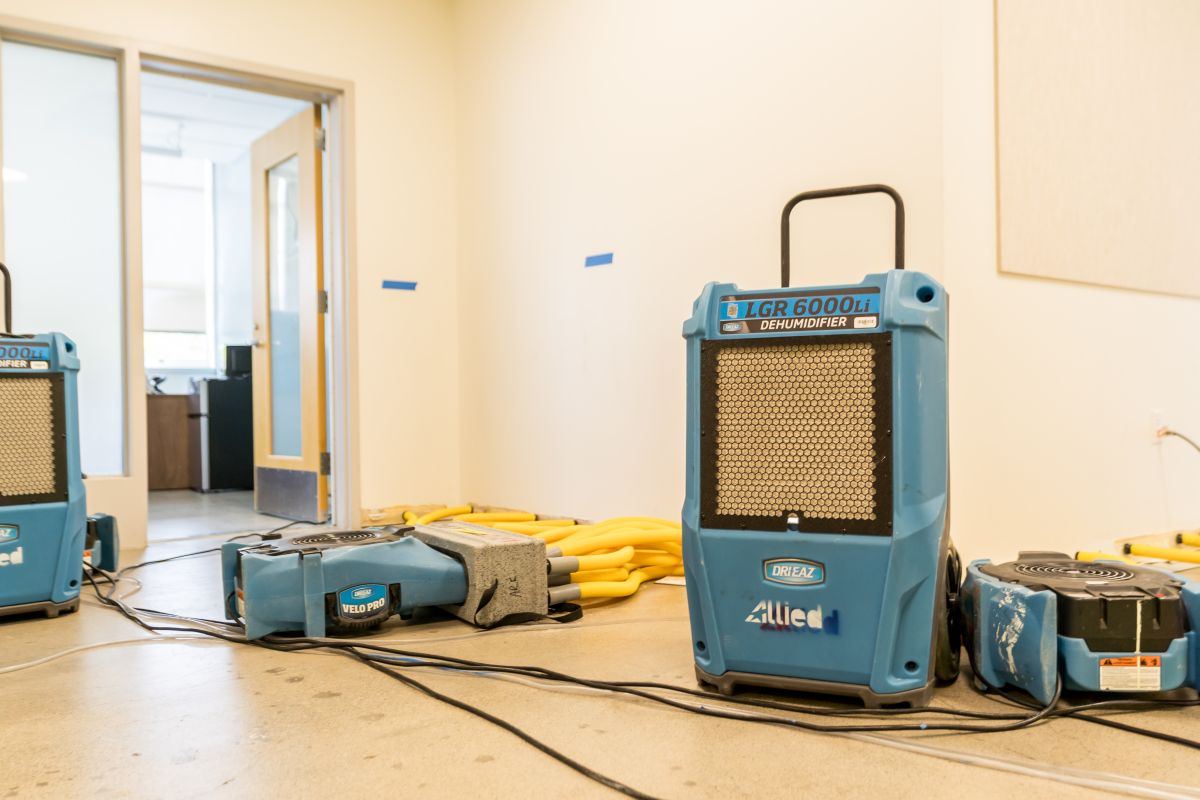
When a commercial building floods, the drying process requires industrial-grade equipment that far exceeds what residential restoration jobs demand. Two of the most critical tools in large-loss commercial drying are desiccant dehumidifiers and temporary power systems. Understanding how these systems work together can mean the difference between a successful restoration and a total loss.
What Is a Desiccant Dehumidifier?
Unlike refrigerant dehumidifiers that remove moisture by cooling air below its dew point, desiccant dehumidifiers use silica gel or similar hygroscopic materials to chemically absorb moisture from the air. This makes them effective at very low temperatures and in large open spaces where refrigerant units lose efficiency.
In commercial applications, desiccant units are typically ducted systems capable of processing thousands of cubic feet of air per minute. Allied Restoration's desiccant fleet includes units capable of 5,000 CFM and above — enough to aggressively dry a large commercial floor plate within days rather than weeks.
Temporary Power Requirements
Running commercial drying equipment requires significant electrical capacity. A typical large-loss setup with multiple desiccant units, air movers, and monitoring equipment can draw 100-400 kW of power — far beyond what a building's compromised electrical system can safely provide after a flood.
Allied Restoration deploys diesel generator trailers ranging from 100 kW to 400 kW to power restoration operations independently of the building's electrical infrastructure. This is critical both for safety and for maintaining consistent drying conditions around the clock.
The Combined Drying System
Effective commercial drying requires the coordinated operation of several systems working together: desiccant dehumidifiers extract moisture from the air, air movers accelerate evaporation from structural materials, and exhaust systems push humid air out of the building. The generator powers all of these systems continuously, even overnight.
Allied Restoration's project managers create a detailed drying plan for each commercial loss, specifying equipment placement, airflow patterns, and daily moisture monitoring targets. This documentation is provided to insurance adjusters to support the claim and demonstrate that drying was performed to IICRC S500 standards.