
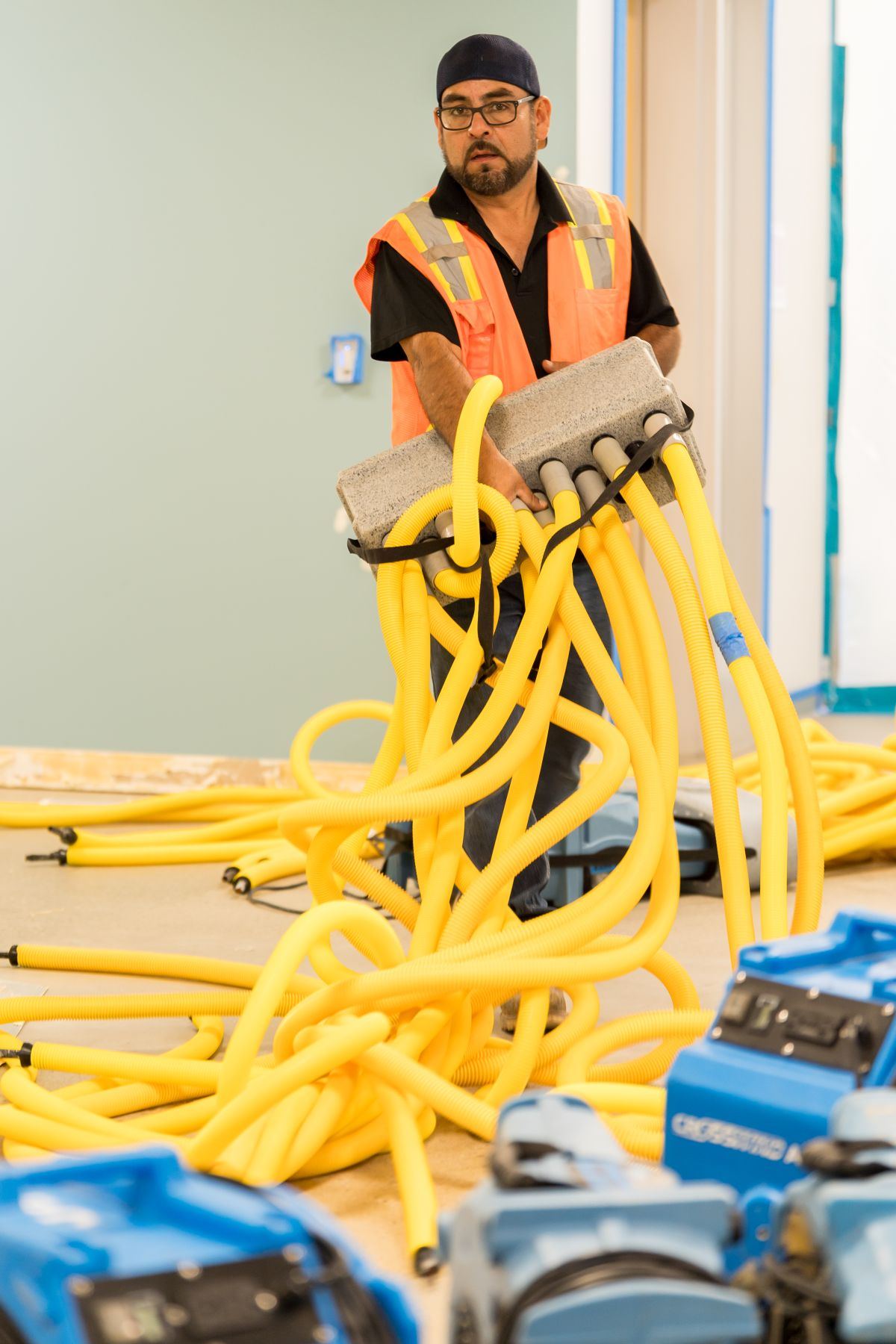
Water extraction is the critical first step in any flood restoration project. Before drying equipment can work effectively, standing and trapped water must be removed as quickly as possible. Vacuum extractors — both portable and truck-mounted — are the primary tools for this phase of the restoration process.
Types of Water Extractors
Portable extractors are self-contained units with their own vacuum motor, solution tank, and waste tank. They're ideal for residential jobs and spaces that truck-mount hoses can't reach. Allied Restoration uses high-capacity portable extractors rated for 90+ gallons per hour of water removal.
Truck-mounted extractors are significantly more powerful, using the van's engine to drive a large vacuum system. They're faster on open floors but limited by hose length — typically 150-200 feet from the truck.
Extraction Technique
Start extraction at the lowest point of the affected area and work systematically toward exits. Use slow, overlapping passes with the extraction wand — rushing causes water to be pushed rather than extracted. On carpet, use a weighted extraction tool to compress the carpet pile and remove water trapped in the backing and pad.
Hardwood floors require careful extraction along the grain to remove water from between boards before it causes warping and cupping. Allied Restoration uses specialized hardwood floor drying systems that combine extraction with directional drying to save floors that might otherwise need replacement.
When to Stop Extracting and Start Drying
Extraction removes bulk water but can't get moisture out of structural materials like subfloor, wall cavities, and concrete. Once no more water is being recovered from surfaces, it's time to transition to structural drying with air movers and dehumidifiers. This typically takes 30-60 minutes of active extraction on a residential loss.