
After a major water damage event, fire, or natural disaster, the building's electrical system is often offline, damaged, or unsafe to energize. Restoration crews need a reliable power source to run extraction equipment, drying systems, lighting, and communications. Here's how professional restoration contractors set up temporary power for disaster clean-up operations.
Assess Power Requirements First
Before bringing any generator on site, the project manager calculates the total electrical load of all planned restoration equipment. Water extractors, air movers, dehumidifiers, desiccant units, and lighting all have specific amperage requirements. Undersizing the generator causes voltage fluctuations that can damage equipment and slow drying — oversizing wastes fuel and money.
For most residential water damage jobs, a 20-50 kW generator is sufficient. Large commercial losses or jobs requiring desiccant dehumidifiers may require 100-400 kW units.
Generator Placement and Safety
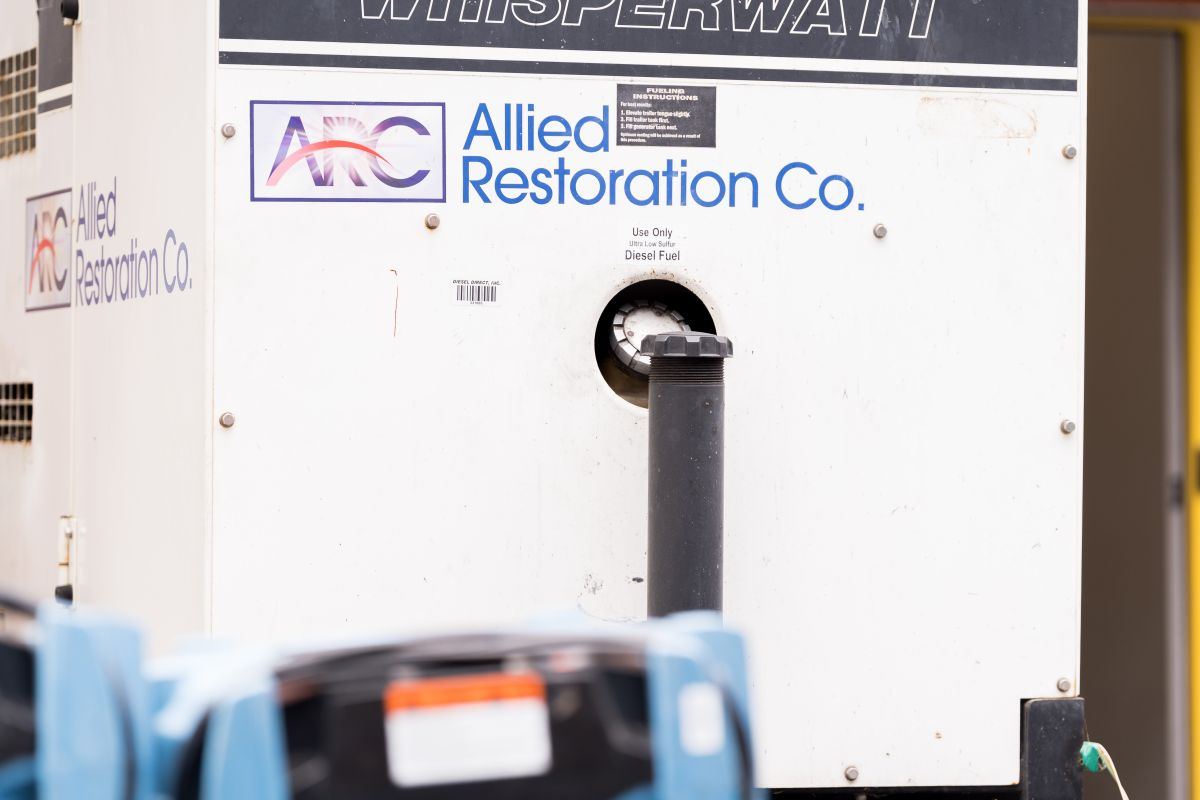
Generators must be placed outside and downwind from any building openings to prevent carbon monoxide buildup. Allied Restoration's generators are trailer-mounted for easy positioning. A minimum clearance of 10 feet from windows and doors is required, and exhaust must be directed away from occupied spaces.
Fuel capacity is another key consideration on large jobs. Allied's 400 kW generators can run 24 hours on a single tank, but extended jobs require a fuel delivery schedule to maintain continuous operation.
Distribution and Safety Compliance
Power from the generator is distributed through spider boxes — portable power distribution panels that provide multiple circuit-protected outlets. All temporary electrical connections must comply with OSHA standards and local electrical codes. GFCI protection is required for all temporary power circuits near water.