
Crawlspace flooding is one of the most damaging and difficult-to-address water damage scenarios. A wet crawlspace creates ideal conditions for mold growth, wood rot, and structural damage — and because it's out of sight, flooding can go undetected for days or weeks. Here's how professional restoration contractors approach crawlspace water removal.
Safety First
Before entering a flooded crawlspace, the electrical service to the building must be confirmed off at the main panel. Submersible pumps should be battery or pneumatically powered for initial extraction. Confined space protocols apply — ventilate the space and have a safety observer present.
Initial Water Removal
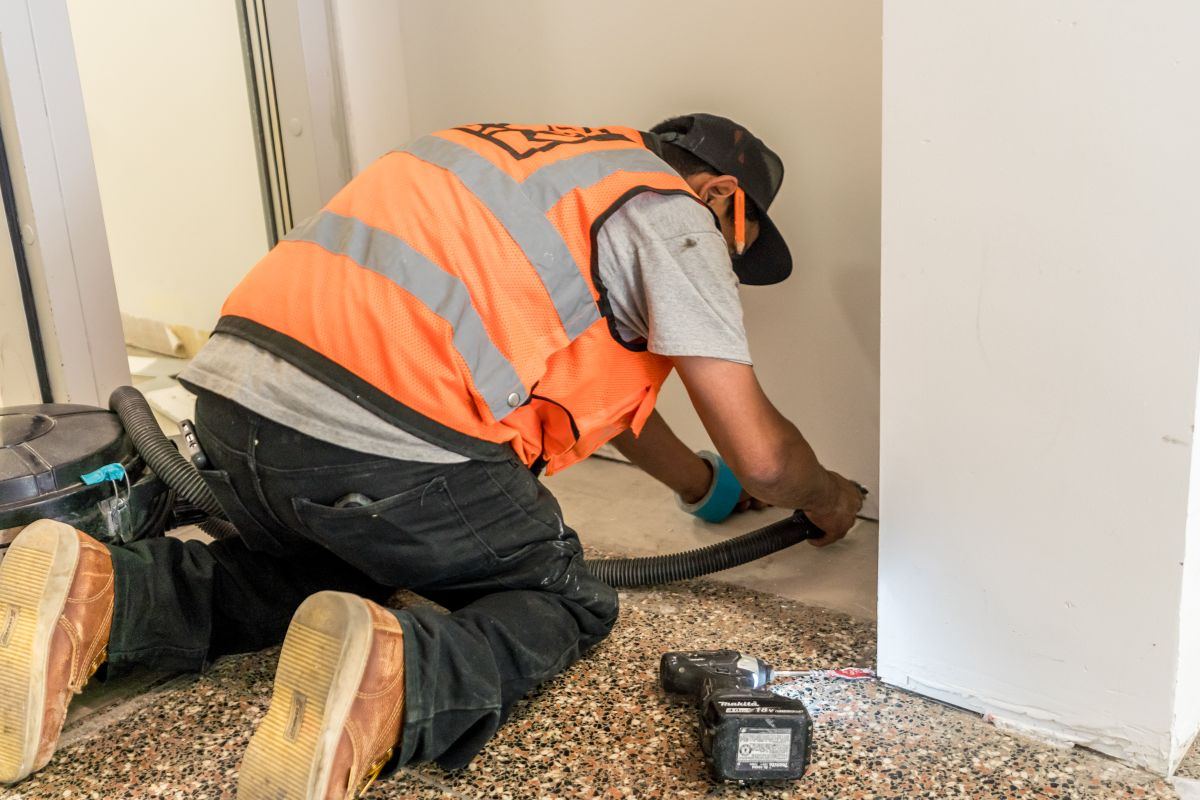
Submersible pumps handle bulk water removal in crawlspaces. Position the pump at the lowest point and route the discharge hose to daylight outside the foundation. Allow the pump to run until it begins pulling air rather than water, then switch to a wet vacuum for the remaining puddles and low spots.
In crawlspaces with a vapor barrier, water often pools under the plastic sheeting rather than on top of it. Carefully cut and fold back sections of vapor barrier to access trapped water.
Structural Drying
After bulk water removal, the subfloor, floor joists, sill plates, and vapor barrier must all be dried to below 16% moisture content for wood. Allied Restoration uses compact air movers designed for low-clearance spaces, positioned to create crossflow drying across all structural surfaces.
LGR dehumidifiers placed at the crawlspace access opening capture the humid air driven out by the air movers. Daily moisture readings track progress and determine when the space has reached acceptable drying standards.
Mold Assessment
Any crawlspace that has been wet for more than 48-72 hours should be assessed for mold growth before the space is sealed back up. Allied Restoration's AMRT-certified technicians inspect all structural surfaces and can perform air sampling to determine if remediation is needed prior to restoring the vapor barrier.