
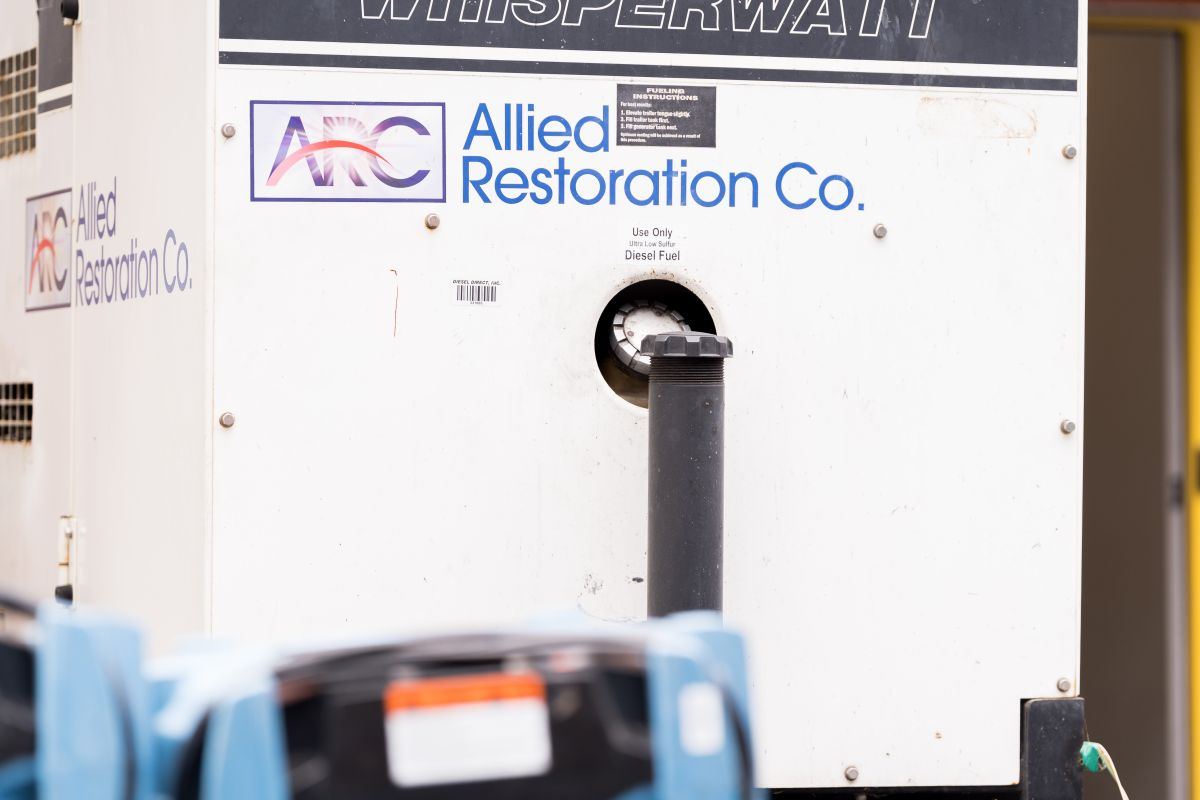
Selecting the right generator size for a water damage or disaster restoration project is one of the most important logistical decisions a restoration contractor makes. Too small and equipment won't run properly. Too large and you're burning unnecessary fuel and money. Here's how Allied Restoration approaches generator sizing.
Calculate Total Connected Load
Start by listing every piece of electrical equipment that will run simultaneously at peak operation. For each item, note the running wattage and the startup surge wattage — electric motors (like those in air movers and dehumidifiers) can draw 2-3x their running load at startup.
A typical residential water damage setup might include: 10 air movers at 7.5 amps each, 2 LGR dehumidifiers at 7.5 amps each, lighting at 5 amps, and a water extractor at 12 amps — totaling approximately 115 running amps, or about 13 kW at 120V. Adding a 25% safety margin, a 20 kW generator handles this job comfortably.
Commercial Loss Sizing
Commercial losses with desiccant dehumidifiers require dramatically more power. A single large desiccant unit can draw 30-80 amps at 480V three-phase. Multiple units plus air movers and monitoring equipment on a large commercial floor plate can easily require 200-400 kW of generation capacity.
Allied Restoration maintains a fleet of generators from 20 kW residential units up to 400 kW commercial trailers to match the right power source to each job.
Runtime and Fuel Planning
Restoration drying runs 24/7 for days or weeks. Calculate fuel consumption at the expected load percentage and schedule deliveries to ensure uninterrupted operation. Stopping the drying process even briefly can set the project back significantly, particularly in early stages when moisture levels are highest.