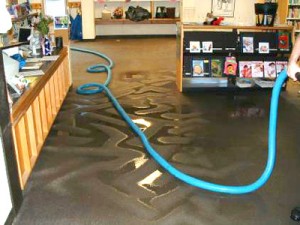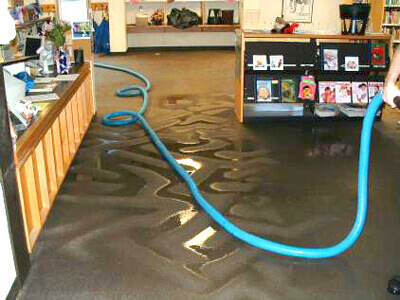
There is one item virtually guaranteed not to survive any kind of water damage either in a residential or a commercial setting: the carpet.
Carpet removal can be an extremely delicate operation under the best of conditions, depending on the state of the carpet, the flooring underneath, the chemicals used in the glue and the ventilation of the property. After smoke, fire or water damage has compromised the chemicals inside the carpet and the empty spaces beneath the floor, there’s an additional level of danger to the residents’ or employees’ health. This makes the operation fraught with much more serious challenges. Under no circumstances should property owners attempt to contract out this job to unqualified workers or attempt to handle the job themselves. The results could be more catastrophic than the original damage. After the carpets have been professionally dried enough to work with, the complex process of disengagement from the tack strip begins. The underlying carpet pad must be destroyed and disposed of without any damage to adjacent areas or allowing the remaining moisture to spread any further.
The working floor must immediately be treated with EPA-qualified cleaners in order to prevent the incursion of microbial growth, including mold and mildew.
Before re-installation can begin, deodorization techniques must be professionally applied. If not performed properly, the smell can never be eliminated and can spread to other porous materials.
All of our carpet disengagement and re-installation professionals are certified with the The Institution for Inspecting, Cleaning and Restoring Certification (IICRC) to excel in the evaluation and deployment of industry standards in safe and effective carpet handling after a disaster.
Published by Michael T.
Michael is a water damage expert. Trained by IICRC, Restoration industry association , and a member of the California contractors state license board. Member of BOMA San Francisco. He is an advocate for proper property damage restoration techniques and procedures. He writes about his experience and knowledge from the industry. Writes about property and casualty insurance claims handling, and negotiating with insurance adjusters.
View more posts
Manage Consent
To provide the best experiences, we use technologies like cookies to store and/or access device information. Consenting to these technologies will allow us to process data such as browsing behavior or unique IDs on this site. Not consenting or withdrawing consent, may adversely affect certain features and functions.
Functional
Always active
The technical storage or access is strictly necessary for the legitimate purpose of enabling the use of a specific service explicitly requested by the subscriber or user, or for the sole purpose of carrying out the transmission of a communication over an electronic communications network.
Preferences
The technical storage or access is necessary for the legitimate purpose of storing preferences that are not requested by the subscriber or user.
Statistics
The technical storage or access that is used exclusively for statistical purposes.The technical storage or access that is used exclusively for anonymous statistical purposes. Without a subpoena, voluntary compliance on the part of your Internet Service Provider, or additional records from a third party, information stored or retrieved for this purpose alone cannot usually be used to identify you.
Marketing
The technical storage or access is required to create user profiles to send advertising, or to track the user on a website or across several websites for similar marketing purposes.
To provide the best experiences, we use technologies like cookies to store and/or access device information. Consenting to these technologies will allow us to process data such as browsing behavior or unique IDs on this site. Not consenting or withdrawing consent, may adversely affect certain features and functions.